
The 6-Volt Reminder
After chasing ignition problems, a tiny fuse reminded me to start with the basics
Since I shared the story about my beloved 1958 Bug breaking down in this column last issue, I should probably continue where that story left off. On the first drive of 2026, just a few days after New Year's Day, my '58 suddenly stalled while I was making a right turn at a major intersection. The unexpected breakdown required a tow through AAA.
The tow truck driver who responded was Alex Rivas from Sea Country Towing — a fellow VW enthusiast who recognized my name and personally came to help. What started as a disappointing breakdown quickly turned into a positive experience thanks to that connection.
In last month's column, I wrote about the happy ending and the wonderful VW community that came through to help. However, of course, the problem with my Bug wasn't actually fixed at that point. I still had to find out what caused the issue and repair it — something I didn't explain in the previous issue. This month, I'll get into the more technical side of what happened with the car.
I've mentioned several times here that my 1958 Beetle is powered by a hot-rodded version of the early 36hp engine — built as a 1488cc using Wolfsburg West's Okrasa-style dual-port heads and dual Weber 40 IDF carburetors. The car still runs on its original 6-volt electrical system.
For ignition, I chose a modern performance distributor instead of the traditional Bosch 010 — the 123 Ignition distributor. One advantage of this unit is that you can program the timing curve exactly as you want, and the timing precision is so accurate that you can even notice the difference at idle.
The 123 Ignition, made in the Netherlands, is well known in Europe among owners of classic Volkswagens and many other vintage European cars. It's also one of the few modern performance distributors designed to work with a 6-volt electrical system. I installed this unit nearly 10 years ago, and it had been extremely reliable ever since I swapped in the hot rod engine. However, it appeared that this distributor might finally be reaching the end of its life and had stopped providing spark.
Back in my garage, I began tracing the problem. The first thing I checked was fuel — yes, fuel was present and the fuel pump was working properly. Next, I replaced the coil, but the engine still wouldn't fire up. Then I installed a spare Bosch 009 distributor that had been sitting in my parts bin for a long time. With the 009 installed on my 36hp engine, the engine finally started—but it ran terribly, sounding like it was only running on three cylinders. I ordered a new 123 Ignition distributor, and it arrived two days later. After installing it, the engine started right away and ran perfectly. Problem solved!
I also learned that 123 Ignition USA, the American distributor, offers a repair service for older units at a very reasonable cost. They even offered to upgrade my original unit — from the older USB-programmed version to the newer Bluetooth-programmable system for less than half the price of buying a new unit.
So, I sent my 10-year-old distributor in for service. Now I have a freshly rebuilt spare unit ready to go, which I can use on another ride. I was super happy.
However, about a week later, on my way home from the office, the engine stalled again while I was waiting at a traffic light at an intersection. I felt like I was having a heart attack. Oh no — don't do this to me again, especially in the middle of the busy street!
Fortunately, the engine started right back up — after cranking longer than usual — before the traffic light turned green, and it ran normally the rest of the way home. Still, the incident made me wonder if my VW might be becoming too unreliable. I didn't want to drive my VW worrying that the engine might stall at any time. I began questioning whether I could continue using it for my daily commute. What was I missing? Maybe my old 123 distributor hadn't actually failed after all? I scratched my head for several days, wondering what the real problem could be. The carburetors were behaving normally whenever the engine was running, yet the engine would still stall or nearly stall. That led me to suspect the issue had to be somewhere in the electrical system.
Then, one night while I was lying in bed, a very basic thought suddenly flashed through my mind: the fuse terminals… Yes, that was it. I suddenly remembered that the same thing had happened once before on the freeway — and I had completely forgotten about it.
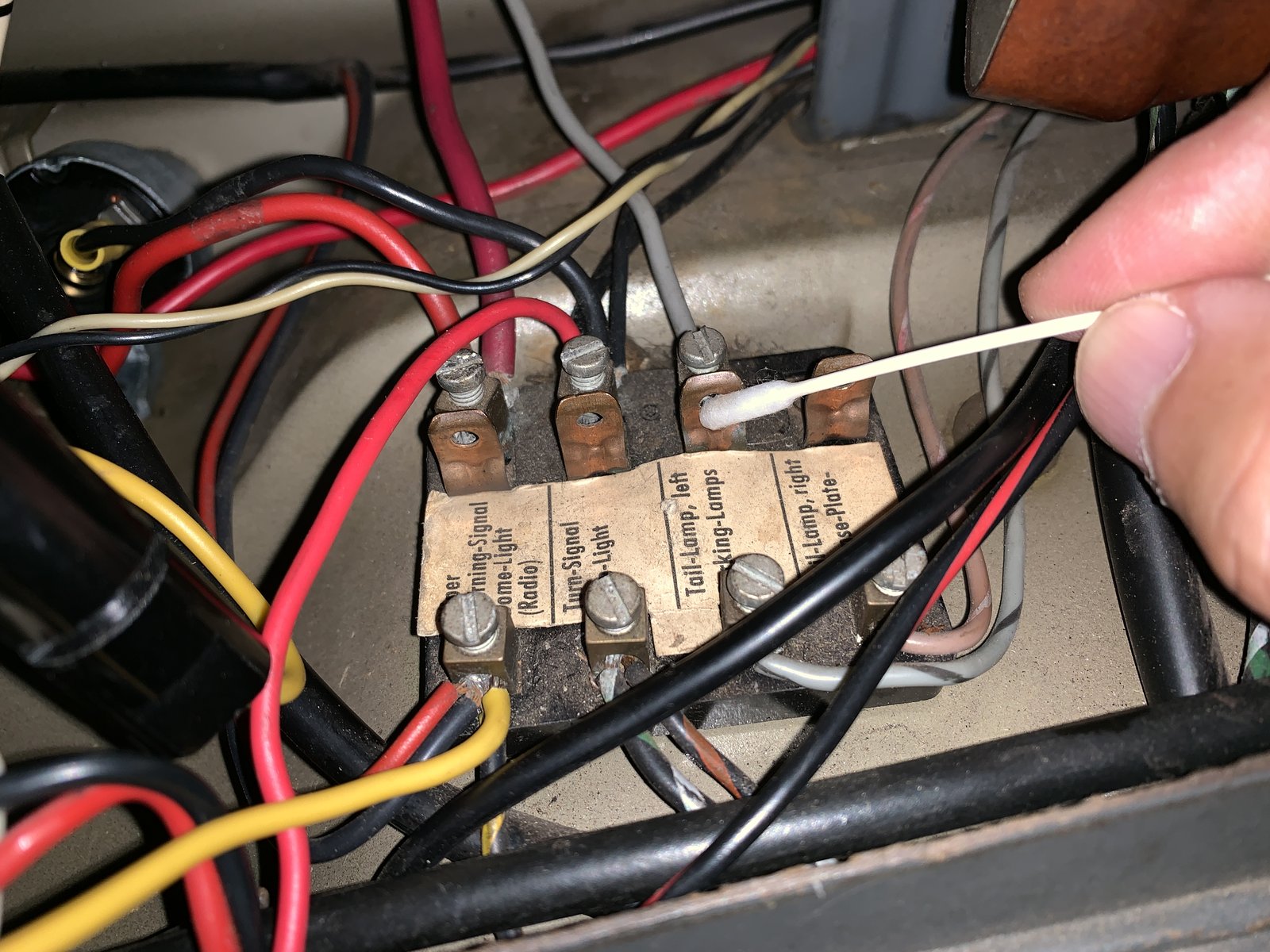
The next day, I opened the hood and removed the wiring cover to access the fuse panel. What I did was simply move the main power fuse slightly—without even removing it. Later, I noticed the engine fired up much better. Just to be safe, I cleaned every fuse terminal and connection. After that, the problem completely disappeared.
Yes, fuse and wiring connections are especially critical on cars with a 6-volt electrical system. Because 6-volt systems carry higher current than 12-volt systems, even a slightly dirty or loose connection can interrupt power to the ignition. It's a very basic thing when you own a 6-volt car — and somehow, I forgot. I love Volkswagens. Now my '58 Bug runs perfectly again, and I have no hesitation about driving it anywhere. Just remember — when diagnosing a problem on a classic VW, always start with the most basic things. Sometimes the smallest connection tells the whole story.